
Lithium batteries can travel by air from China to Pakistan only when the exact battery configuration, test evidence, packaging and airline requirements are satisfied. A phone or laptop with its battery installed is not classified the same way as a carton of loose replacement batteries or power banks.
Mohsin Air Cargo reviews battery shipments individually. The broader indicative cargo range is PKR 2,750–20,000 per kg, but battery cargo commonly requires additional assessment and may not qualify for a general-cargo rate or route.
Direct answer: Do not send battery goods to a warehouse as “general electronics.” First provide the battery type, watt-hour rating, product photos, MSDS where applicable and UN 38.3 test summary. Acceptance must be confirmed for the actual configuration.
UN3480 vs UN3481: what is the difference?
| Classification | Typical configuration | Practical example |
|---|---|---|
| UN3480 | Lithium-ion batteries shipped by themselves | Loose rechargeable cells or power banks shipped without equipment |
| UN3481 | Lithium-ion batteries packed with equipment or contained in equipment | A replacement battery packed with a device, or a battery installed in a laptop |
| UN3090 / UN3091 | Lithium-metal battery equivalents | Non-rechargeable lithium-metal cells alone, packed with equipment or installed in equipment |
The correct classification depends on the battery chemistry and how it is packed. Marketing terms such as “portable charger,” “battery accessory” or “electronics” do not determine the dangerous-goods classification.
What documents may be required for lithium batteries?
- UN 38.3 test summary: evidence that the cell or battery type passed the applicable transport tests.
- Battery specification: chemistry, model, voltage, capacity and watt-hour rating.
- MSDS or SDS: supporting safety information where requested by the operator or handling channel.
- Commercial invoice and packing list: accurate product description, quantity, value, net weight and gross weight.
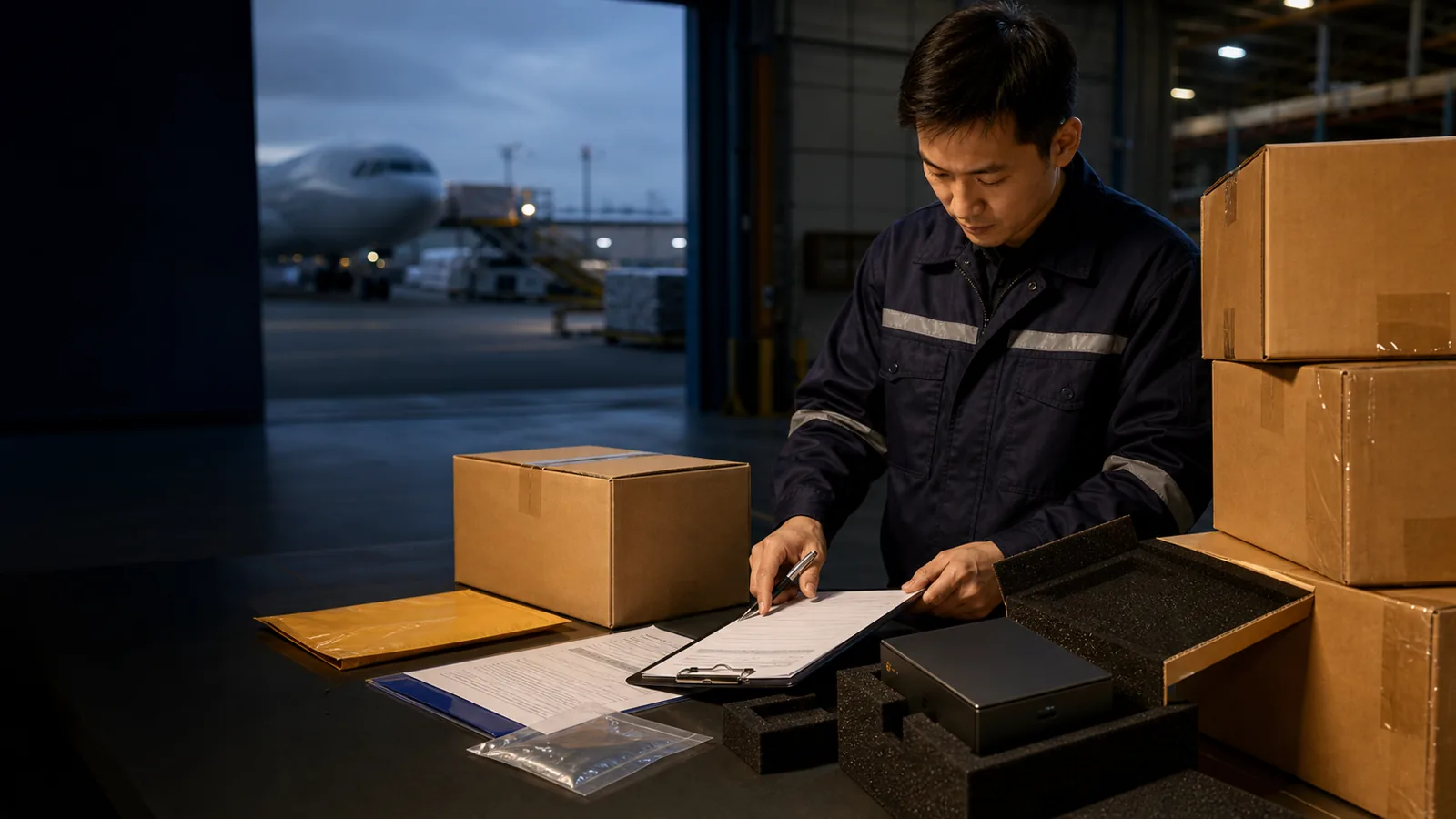
- Product and packaging photographs: clear views of the item, battery marking, inner protection and outer carton.
- Dangerous-goods declaration: required for shipments and configurations governed by the relevant declaration rules.
A supplier’s statement that a product is “safe” is not a substitute for the required technical evidence. Documents must match the battery model actually being shipped.
How should battery cargo be prepared?
- Prevent short circuits. Protect terminals and keep batteries separated from conductive material.
- Prevent movement. Use suitable inner packaging and cushioning so items cannot shift or be crushed.
- Prevent accidental activation. Equipment must be protected against switching on during transport.
- Use sound outer packaging. Cartons must be appropriate for the contents and required packing instruction.
- Apply the correct marks and labels. Requirements depend on battery type, quantity, configuration and applicable exception.
- Keep information consistent. The invoice, packing list, labels and technical documents must describe the same goods.
Damaged, defective, recalled, swollen, leaking or unidentified batteries require separate specialist advice and may be prohibited from air transport.
How the China-to-Pakistan review works
- Send the product link, photos and battery specification before supplier pickup.
- Provide the UN 38.3 test summary and any requested MSDS/SDS.
- Share carton count, dimensions, gross weight and quantity of batteries or devices per carton.
- Wait for written confirmation of the accepted configuration and route.
- Prepare or correct packaging and labels as instructed.
- Approve the final quotation after chargeable weight and handling requirements are confirmed.
- Track the shipment through air transport, Pakistan customs processing and delivery.
The normal China-to-Pakistan service target is 7–14 days when the goods and documents are ready, but dangerous-goods acceptance, airline capacity or customs checks can extend the timeline.
Why battery cargo can cost more
The PKR 2,750–20,000/kg range is affected by the same weight, route and customs factors as other cargo, plus battery-specific work:
- specialist acceptance and document review;
- approved packaging, marks and labels;
- operator restrictions and limited available capacity;
- dangerous-goods handling or declaration requirements;
- the difference between batteries alone and batteries contained in equipment;
- quantity, watt-hour rating and state-of-charge rules that may apply.
Never select a shipping method solely because it has the lowest per-kilogram rate. An incorrectly declared battery shipment can be refused, delayed or subject to enforcement.
Common mistakes to avoid
| Mistake | Why it matters |
|---|---|
| Calling a power bank “electronics” | A power bank is treated as a battery, not simply as ordinary equipment. |
| Using another model’s test report | The evidence must correspond to the cell or battery type shipped. |
| Hiding batteries inside mixed cartons | Undeclared dangerous goods create safety and compliance risks. |
| Assuming all UN3481 goods use one rule | Contained-in-equipment and packed-with-equipment configurations differ. |
| Relying on an old acceptance message | Operator and regulatory requirements can change; each booking needs current confirmation. |
Frequently asked questions
Can power banks ship by air from China to Pakistan?
Potentially, but power banks are generally treated as lithium-ion batteries shipped by themselves rather than as batteries contained in equipment. Acceptance depends on the exact product, documentation, packing and available operator channel.
Can phones and laptops ship under UN3481?
Battery-powered equipment may fall under UN3481 when lithium-ion batteries are contained in or packed with the equipment. The configuration and documents must still be reviewed; the UN number alone does not guarantee acceptance.
Is an MSDS enough?
No. An MSDS can support the review, but it does not replace the UN 38.3 test summary, correct classification, packaging or other required transport documents.
Can damaged batteries be shipped?
Do not submit damaged, swollen, leaking, defective or recalled batteries as ordinary air cargo. These products face stringent restrictions and require specialist handling advice.
How do I request a battery-cargo review?
Send the product link, battery specification, test summary, MSDS, quantity and carton details to Mohsin Air Cargo on WhatsApp.
Official references
- IATA: Batteries and dangerous-goods guidance
- IATA: Dangerous Goods Regulations
- UNECE: UN Manual of Tests and Criteria
- Federal Board of Revenue: Pakistan Customs Tariff
About the author: Mohsin Afridi writes for Mohsin Air Cargo about practical cargo planning between China and Pakistan.
Commercial disclosure: Mohsin Air Cargo provides cargo services and may benefit when readers request an eligibility review or quotation. This article is general guidance; the current regulations and accepting operator govern each shipment.
Editorial review date: 8 August 2026.